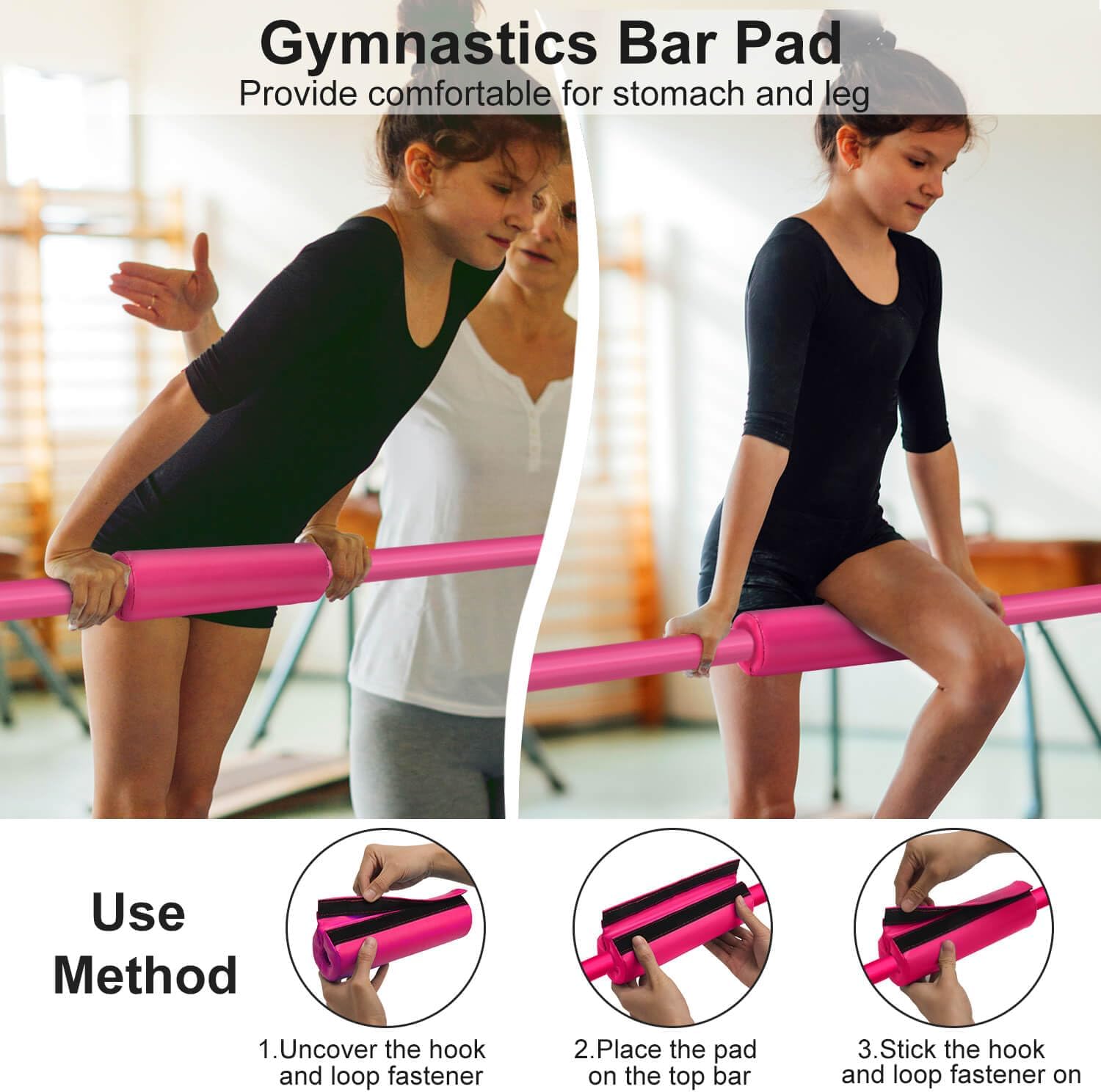
Picture this: your daughter comes home from practice and announces she needs to work on her kip — a move where she hangs from a horizontal bar and swings her hips up to rest on top of it — every single day before her next meet. You pull out the $80 plastic-and-foam bar you bought two years ago, give it a shake, and feel it flex like a pool noodle. You already know the answer before you ask the question.
A gymnastics bar (sometimes called a “kip bar” or “single horizontal bar” in home-use catalogs) is exactly what it sounds like: a horizontal steel or aluminum rail mounted between two vertical uprights, set at an adjustable height so gymnasts can practice hanging, swinging, and skill progressions. At the entry level these bars are sold as toys. At the upper end of the home-use market — roughly $200 to $300 — they behave more like training equipment. The gap between those two descriptions is the subject of this guide. If you’re staring at a bar that wobbles, squeaks, or has a height range your rapidly growing athlete is about to blow past, read on. We’ll walk you through exactly what changes at each price step, what the specs actually mean, and how to decide where to stop.
| EDITOR'S PICK[Costzon Double Horizontal Bars](https://www.amazon.com/dp/B082FFB1NG?tag=greenflower20-20) | Mid-tier[RINREA Gymnastic Bars for Kids…](https://www.amazon.com/dp/B07W4R6N8J?tag=greenflower20-20) | Budget pick[Tepemccu Expandable Gymnastics…](https://www.amazon.com/dp/B07PP22TST?tag=greenflower20-20) | |
|---|---|---|---|
| Max height | 55" | — | — |
| Weight limit | 264 lbs | — | — |
| Adjustable levels | 11 | — | — |
| Folding design | ✗ | ✓ | ✓ |
| Includes mat | — | ✓ | — |
| Price | $279.99 | $119.99 | $79.99 |
| See on Amazon → | See on Amazon → | See on Amazon → |
Why Stability Matters More Than It Did Last Year
When a gymnast is working on basic front supports and tuck hangs, a little flex in the bar is almost a non-issue — the forces involved are modest and the skills don’t require a locked, predictable surface. But somewhere around the kip, the hip circle, and the cast (a move where the gymnast swings their body backward and away from the bar to build momentum), the dynamic load — the force generated by a moving body, not just a stationary one — spikes dramatically.
GymnasticsHQ’s overview of home gymnastics bars notes that dynamic loading during a kip attempt from a child in the 60–80 lb range can briefly multiply effective weight by a factor of two to three. A bar rated for a 130 lb static load (a child simply hanging still) may be seeing 180–200 lbs of force in that peak moment. Entry-level bars are typically rated at 100–130 lbs static. That’s the specification the box shows you. It tells you almost nothing about dynamic performance.
What actually fails first on starter bars:
- Base spread: Cheap bars use narrow, lightweight base legs that rock sideways during casting. The wider the footprint, the harder it is to tip the bar laterally.
- Upright rigidity: Thin-wall steel uprights flex under load. Flex means the bar height changes mid-skill, which is both a fall risk and a mechanical learning problem — the gymnast’s body never gets consistent feedback.
- Bar material: Entry-level bars often use hollow aluminum or thin steel. Mid-range bars shift to solid steel or thicker-wall steel, which dramatically reduces “whip” — the springy bounce you feel when the bar deflects under a dynamic load.
The Three Tiers, Laid Out Plainly
Here’s the honest landscape as of mid-2026:
| Tier | Price Range | Typical Weight Rating | Who It’s For |
|---|---|---|---|
| Entry / toy-grade | $50–$100 | 100–130 lb static | Ages 3–6, basic hangs only |
| Mid-range home training | $100–$180 | 150–180 lb static | Ages 6–10, kip prep, hip circles |
| Upper home / club-adjacent | $180–$260 | 200–250 lb static | Ages 9+, cast work, competitive prep |
The jump from entry to mid-range is mostly about weight capacity and base width. The jump from mid-range to the upper tier is about rigidity, bar diameter conformity, and how long the equipment holds its adjustment settings under repeated use.
USA Gymnastics’ Equipment and Facility Standards document specifies that apparatus used in sanctioned training and competition must meet minimum deflection and load requirements. Home bars at any price tier are not FIG (Fédération Internationale de Gymnastique) or USAG competition-certified — that level starts at purpose-built club apparatus from manufacturers like AAI, Gymnova, or Spieth America in the $800–$2,000+ range. But within the home-use category, the upper tier is meaningfully closer to real training behavior than the entry tier.
What Changes (and What Doesn’t) as You Spend More
Base geometry is the biggest performance variable. Owners of upper-tier home bars consistently report that a wider, adjustable base spread — some models allow you to extend the base legs outward to match the skill being practiced — eliminates the rocking that makes cast work feel unsafe. Entry bars have fixed, narrow bases. That’s not a materials problem you can fix; it’s a geometry problem baked into the design.
Bar diameter affects grip training. Standard gymnastics bar diameter for competition equipment is 40mm (about 1.6 inches). Many entry bars use 38mm or even thinner profiles. Reviewers at GymnasticsHQ have consistently flagged the diameter mismatch as a real issue for athletes training grip-strength patterns they’ll need to transfer to club equipment. Upper-tier home bars more frequently conform to or approach the 40mm standard.
Height adjustment range matters more than you think. A gymnast who was 52 inches tall when you bought the bar may be 58 inches by the time she’s working on kip-to-front-support combinations. Entry bars typically max out around 5 feet; mid-range and upper bars often reach 5’6” to 5’10”, which keeps the equipment useful through more of the competitive developmental window (roughly ages 6–14 for most club programs).
What doesn’t change: No home bar in this price range gives you the spring, the cable tensioning, or the official uprights geometry of a real uneven bar set. If your athlete is at Level 5 or above and training seriously, a coach conversation about gym training time is more important than any home bar upgrade. The home bar’s job is skill reinforcement and conditioning — not competition replication.
The Upgrade Decision: A Simple Decision Tree
You’re probably reading this because you have a specific bar in mind to replace. Here’s how to think through the decision:
If your athlete is under 8 and still learning basic hangs and tuck holds: The mid-range tier ($100–$180) is almost certainly enough. Don’t pay for rigidity you won’t load. The Tumbl Trak kip bar line and comparable mid-range options from Z Athletic and Nimble Sports are frequently cited by parents in aggregated review summaries as solid performers for this age group — wide enough bases, honest weight ratings, and bars that don’t develop play in the adjustment collars after six months of use.
If your athlete is 8–12, working on kip progressions, and training 6+ hours per week at a club: This is the decision zone where the upper tier earns its price. American Athletic Inc.’s home training bars and the Tumbl Trak upper-tier models publish weight ratings in the 200–250 lb range, use thicker-wall steel uprights, and offer wider base configurations. Owners consistently report a qualitatively different feel — the bar stays where you set it, the uprights don’t visibly flex during cast work, and the whole unit sits on the floor without creeping. The $60–$80 premium over the mid-range tier is real money, but so is the difference in training quality over a 12–18 month window.
If your athlete is 12+ and at a competitive level (Level 5 and above, USAG): Be honest with yourself about what a home bar can do. Per USA Gymnastics’ equipment guidance, home apparatus is supplemental. At this level, the conversation shifts to whether the home bar budget ($180–$260) is better spent on extra gym sessions, grip accessories, or conditioning equipment. If the home bar is genuinely filling a gap — early-morning conditioning sets, visualization-linked repetition, injury recovery work — then the upper tier is worth it and a club-adjacent brand like AAI or Tumbl Trak’s professional line is the right call. If the bar would mostly serve as a furniture-grade reminder of gymnastics in the basement, save the money.
By the Numbers
- $80 → $180 upgrade delta: ~$100. Buys you a wider base, a higher weight rating, and a bar that holds adjustment settings under dynamic load.
- $180 → $260 upgrade delta: ~$80. Buys you thicker-wall steel uprights, closer-to-standard bar diameter, and a longer useful height range.
- Useful lifespan, mid-range bar: 2–4 years for a 60–90 lb athlete training 3–5 hours/week at home, per aggregated owner reviews.
- Point at which a home bar stops being the right tool: When the athlete is consistently training skills that require two bars (uneven bar combinations), at which point a freestanding single bar of any home-use grade cannot replicate the movement pattern.
One More Thing Worth Saying Out Loud
The bar upgrade conversation sometimes masks a different question: is it time to add mat coverage under and around the bar? No upgrade in bar rigidity substitutes for a proper landing mat. USA Gymnastics’ safety guidance consistently emphasizes fall-zone coverage as a primary safety consideration for home apparatus setups. A 4-inch landing mat or a folding panel mat positioned under the bar’s fall zone is a more urgent spend than moving from mid-tier to upper-tier bar if you don’t already have that coverage in place. GymnasticsHQ’s home setup overview makes this same point directly: the bar is only one piece of a safe home training environment.
The bottom line: If the bar shakes during casting, doesn’t hold its height adjustment, or has your athlete’s chin brushing the top of the height range, an upgrade is warranted. Match the tier to the skill level and the athlete’s weight, not to ambition. The $180–$260 upper tier delivers meaningfully better rigidity and a longer useful window than entry gear — but it’s not a substitute for gym time, and it’s not competition equipment. Know what you’re buying, and it’ll serve you well.